| 328 Views 15 January 2026 |
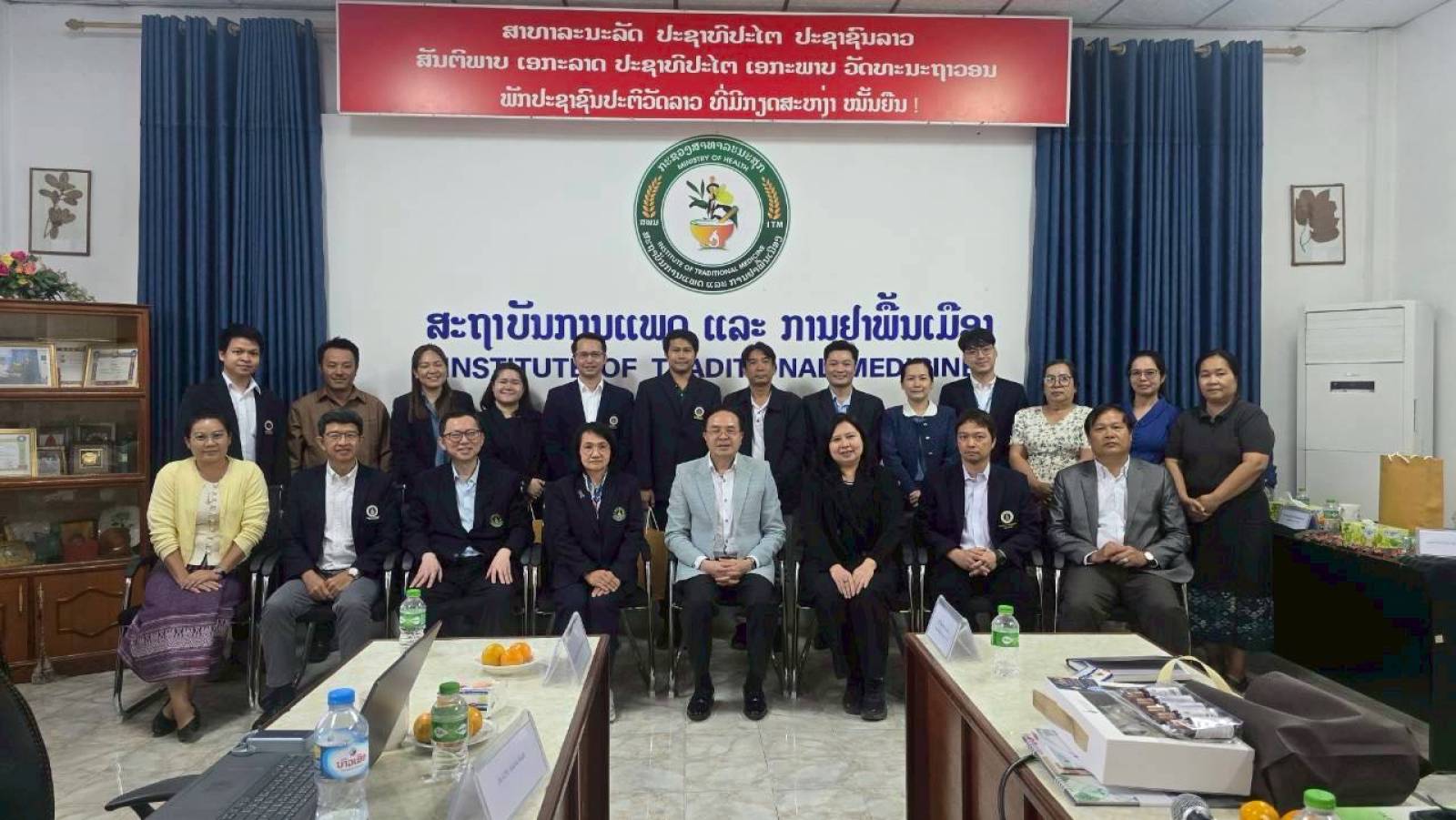
During January 15-16, 2026, the Faculty of Pharmacy, Mahidol University (MUPY), in collaboration with the Siriraj Center of Applied Thai Traditional Medicine (Si-CATTM), Faculty of Medicine Siriraj Hospital, recently conducted an official visit to the Institute of Traditional Medicine and Medicinal Plants (ITMMP), Lao People’s Democratic Republic, in Vientiane. This activity was also supported by the Global Partnership Division, of Mahidol University, and the Ursimone Wietlisbach Foundation.
The delegation was led by Associate Professor Dr. Mullika Chomnawang, Deputy Dean for Innovation Management and Business Relations, Associate Professor Dr. Krit Thirapanmethee, Head of the Department of Microbiology, and Assistant Professor Dr. Bhanubong Bongcheewin, and Head of the Medicinal Plant Information Center, representing the Faculty of Pharmacy, Mahidol University. This visit was undertaken as part of a strategic effort to enhance academic and research collaboration in traditional medicine and herbal product development within the Mekong sub-region, while aligning institutional activities with the United Nations Sustainable Development Goals (SDGs).
During the visit, the delegation also met with the Dean and senior representatives of the Faculty of Pharmacy, University of Health Sciences, Lao PDR. The meeting served as an important platform for potential cooperation in education, research, and innovation. Key areas of discussion included curriculum development, collaborative research and innovation on medicinal plants, and capacity building to strengthen quality assurance, safety evaluation, and standardization of Lao traditional medicinal products.
Both parties shared a common vision of integrating traditional knowledge with modern pharmaceutical sciences to promote sustainable use of medicinal plants and to support the development of high-quality herbal products that meet regional and international standards. The proposed collaboration directly supports several SDGs, particularly SDG 3 (Good Health and Well-being) through the promotion of safe, effective, and evidence-based traditional medicines; SDG 4 (Quality Education) through joint educational initiatives, training programs, and academic exchanges; and SDG 9 (Industry, Innovation and Infrastructure) by fostering research and innovation in herbal product development. In addition, the sustainable use of medicinal plant resources and the valorization of indigenous knowledge contribute to SDG 12 (Responsible Consumption and Production) and SDG 15 (Life on Land).